Anxiety and Performance Pressure
How Kinesiology Quiets the Nervous System
Deborah J Tyson — Kinesiologist & Speaker
What Performance Anxiety Actually Is
Performance anxiety is not a character trait. It is a nervous system state — specifically, a pattern of chronic activation in the sympathetic nervous system (the “fight or flight” response) that has become the default baseline rather than an occasional response to genuine threat.
In evolutionary terms, the stress response is a sophisticated and life-saving system. When you face genuine danger, the hypothalamus triggers a cascade of hormonal and neurological responses: heart rate increases, breathing shallows, muscles tense, and attention narrows. You are primed to act. The problem is that the human nervous system cannot easily distinguish between physical danger and social or professional threat — and for high-achieving women operating in demanding environments, the professional “dangers” are constant: judgment, failure, visibility, disappointing others, not measuring up.
Over time, the stress response becomes less a reaction to specific threats and more a permanent background state. The nervous system never fully returns to baseline. The anxiety is always there — at a low simmer when things are calm, at a roar when the stakes feel high.
What Constant Activation Actually Costs You
Living in a state of chronic performance anxiety exacts a serious physiological toll. Sustained cortisol and adrenaline elevation impairs immune function, disrupts sleep, creates inflammatory conditions, and — crucially — degrades the very cognitive functions you rely on most.
Chronic stress shrinks the hippocampus (involved in memory and learning) and enlarges the amygdala (the brain’s threat-detection centre). In practical terms, this means that under sustained performance pressure, you become more reactive, less capable of creative or flexible thinking, and progressively less able to perform at your actual best — even as the internal pressure to do so intensifies.
This is one of the great ironies of performance anxiety: it undermines the performance it is trying to protect.
Emotional overwhelm is not a sign of weakness. It is a sign that your emotional processing and regulatory systems have been operating beyond their sustainable capacity for an extended period.
Beyond the cognitive, there is the relational cost. Women in chronic sympathetic activation often describe a growing inability to be fully present — in conversations, in relationships, in the moments of joy and rest that life offers. The nervous system is always scanning for threat, always half-engaged. Over time, this disconnection compounds. Life narrows to the doing and the managing and the achieving, and the experience of actually living quietly slips away.
The Role of the Body in Anxiety
Most interventions for anxiety — CBT, medication, coaching — approach it at the level of the mind. Reframe the thought. Challenge the belief. Develop a more rational perspective. These approaches have genuine value, but they share a significant limitation: they treat anxiety as primarily a cognitive problem, when in fact it is fundamentally a somatic one.
The anxiety is in your body. It lives in the tension your shoulders hold. In the shallow breathing you don’t notice until someone points it out. In the clenched jaw, the held gut, the way your chest tightens in certain meetings. In the sleep that never quite settles into depth.
When we address anxiety only at the level of thought, we are working at the surface. The nervous system — which is what is actually generating the anxiety response — is not a thinking organ. It does not respond to reasoning the way the prefrontal cortex does. It responds to body-based signals: breath, movement, touch, sound, pressure, and the felt sense of safety.
Research in trauma and somatic psychology — particularly the work of Bessel van der Kolk (“The Body Keeps the Score”), Peter Levine (Somatic Experiencing), and Stephen Porges (Polyvagal Theory) — has established clearly that the body is the primary locus of stored stress. The nervous system holds the memory of unresolved stress experiences in its regulatory patterns, its muscle tension, its hormonal rhythms. Healing requires direct engagement with the body, not just the mind.
How Kinesiology Addresses Anxiety at the Root
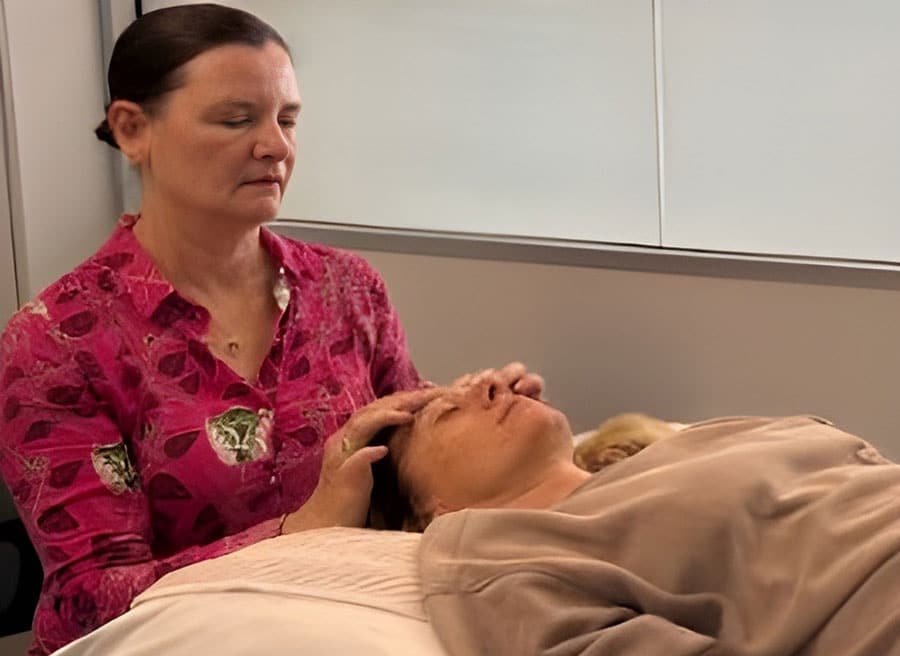
In a kinesiology session for anxiety, we are not primarily talking about your anxiety — we are working with your nervous system directly. Muscle testing provides access to the body’s own information about what it is holding: which specific stressors are dominant, what age or experience they are connected to, what physiological systems are most affected, and what the body needs to shift.
The interventions used — acupressure on specific meridian points, sound frequencies, vibrational remedies, NLP and theta healing techniques — work to discharge the stored stress from the nervous system and restore the body’s natural regulatory capacity. Sessions are gentle, non-invasive, and often produce a noticeable shift in the felt sense of anxiety even in the first appointment.
What changes over the course of treatment is not just the acute anxiety response — it is the baseline. The nervous system gradually recalibrates to a lower level of background activation. The trigger threshold rises. The recovery time after a stressful event shortens. And progressively, the constant hum of “not enough” begins to quiet.
Anxiety, Identity, and the Fear of Who You’d Be Without It
One dimension of performance anxiety that is rarely addressed is the identity dimension. For many high-achieving women, the anxiety has been present for so long that it has become woven into their sense of self. It feels like part of who they are — even part of what makes them good at what they do.
There is often an unconscious fear beneath the conscious desire to be free of anxiety: if I’m not anxious, will I still push myself? Will I still care? Will I still achieve? This fear is understandable, but it is based on a false premise. The drive to do good work, to contribute meaningfully, to set high standards — these do not live in the anxiety. They live in your genuine values, your curiosity, your love of craft. The anxiety is the distortion — the shadow that mimics drive but is actually fear in disguise.
There is often an unconscious fear beneath the conscious desire to be free of anxiety: if I’m not anxious, will I still push myself? Will I still care? Will I still achieve?
Women who move through kinesiology treatment for performance anxiety consistently report that they do not lose their edge. They gain access to it in a purer form: motivated by genuine engagement rather than fear of failure, present in their work rather than performing it, capable of the very creativity and flexibility that chronic anxiety suppresses.
What to Expect
If you are coming to kinesiology for anxiety and performance pressure, you can expect the first session to involve a detailed consultation and a full-body muscle testing assessment to identify the primary drivers of your current state. Most clients notice something shift — a physical release, a quieting, a sense of being slightly less tightly wound — within or immediately after the first session.
Consistent change in the anxiety baseline typically occurs over six to twelve sessions, depending on the depth and duration of the pattern. In my practice, I have worked with women who have lived with performance anxiety for twenty or thirty years and have been astonished to find — often for the first time in their adult lives — what it feels like to simply be, without the constant hum of not-enoughness in the background.
That state is available to you. It is not reserved for people who are wired differently or who had easier starts. It is what the human nervous system is capable of, given the right conditions and the right support.
What Kinesiology Addresses in Anxiety Recovery
Nervous system dysregulation · Stored emotional stress · Hormonal and adrenal imbalance · Limiting beliefs driving overperformance · Physical tension patterns · Sleep and energy disruption · Loss of identity and purpose · The anxiety that won’t switch off
Deborah J Tyson — Kinesiologist, Speaker & Founder of Blisspot
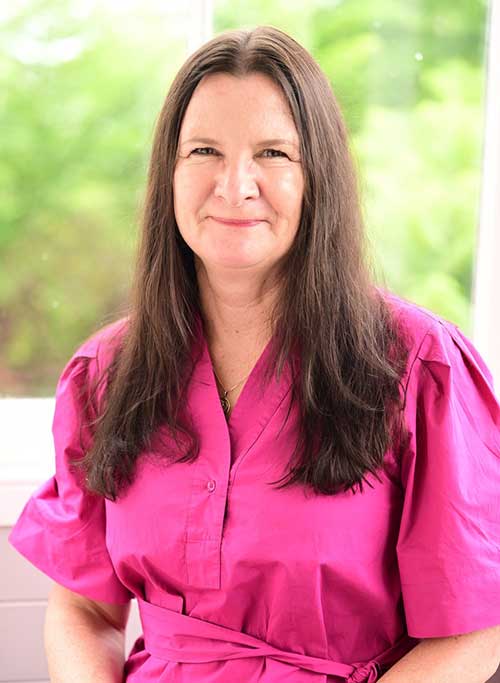
Deborah J Tyson has been practising kinesiology for over 30 years from her clinic in Neutral Bay, Sydney. She is also an award-winning international keynote speaker and the founder of Blisspot, a global wellness platform. She offers in-person and online sessions for anxiety and performance pressure.

Kinesiology
Ready to Address the Root — Not Just the Symptoms?
Book a free 15-minute call with Deborah to share what you’re experiencing and find out whether kinesiology is the right fit for you. No obligation. No jargon. Just a real conversation about what’s possible.
Keep Reading
Chronic stress and emotional overwhelm — the physical toll of sustained pressure, and how the body holds it.
Or read more about kinesiology in Sydney and how a session works.